Home
›
Mix snack mix
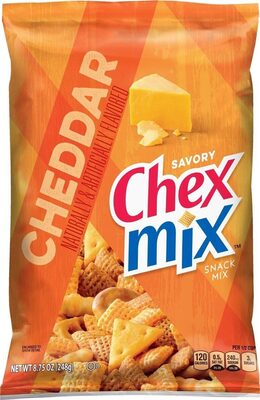
Why this verdict: 5 high-concern ingredient(s) present.
Limited data.
Nutrition facts panel is not on file for this product. The verdict reflects ingredient signals (NOVA, additive severity) only — not the full nutritional profile.
How it scored 0 / 100
Nutrition
—
No nutrition facts on file
Additives
0 / 30
Severity-weighted
Processing
0 / 10
NOVA group 4
Nutrition snapshot
Nutri-Score
ABCDE
EU 5-tier scale (poor)
NOVA group
4
Ultra-processed
Saturated fat
1.7 g
per 100 g
Serving
30 g
1/2 cup (30 g) (30 g)
Ingredients 56 listed
- 1 Cornmeal Coarse flour ground from dried whole corn (Zea mays) kernels.Safe
- 2 Wholemeal Generic umbrella term for whole-grain flour or meal, typically wheat unless specified.Low
- 3 Flour Powder from milled grain, typically wheat (Triticum spp.) unless otherwise specified.Low
- 4 Vegetable Oil Generic term covering edible oils extracted from plant sources (soybean, canola, corn, sunflower, palm, etc.).Low
- 5 Sugar Sucrose, a disaccharide of glucose and fructose, refined from sugarcane or sugar beets.Moderate
- 6 Whey Powder Dried product from whey, the liquid byproduct of cheesemaking, composed primarily of lactose, whey proteins, and minerals.Low
- 7 Corn Syrup Solids Dried corn syrup; refined glucose-based sweetener from cornstarch hydrolysis.Low
- 8 High Fructose Corn Syrup Sweet, nutritive saccharide mixture from enzymatic conversion of corn starch hydrolysate, containing approximately 42% or 55% fructose with …Moderate
- 9 Sour Cream Cultured dairy product made by fermenting cream with lactic acid bacteria.Low
- 10 Natural And Artificial Flavouring A blanket label for proprietary flavor mixtures combining naturally derived flavor constituents (essential oils, extracts, distillates) with…Low
- 11 Sodium Hydrogen Carbonate Sodium hydrogen carbonate (sodium bicarbonate, NaHCO3), commonly known as baking soda.Low
- 12 Yeast Single-celled fungus, primarily Saccharomyces cerevisiae, used in fermentation and baking. A whole-food microorganism with millennia of food…Safe
- 13 Barley Malt Syrup Sweetener made by sprouting barley (malting), then mashing and concentrating the resulting maltose-rich liquid. Roughly 65% maltose with sma…Low
- 14 Butter Dairy product churned from cream of cow's milk; ~80% milkfat by FDA standard of identity.Safe
- 15 Annatto Natural carotenoid pigments (bixin, norbixin) extracted from seeds of the Bixa orellana tree.Low
- 16 Whey Liquid or dried protein-rich byproduct of cheese making, derived from milk.Low
- 17 Mono- And Diglycerides Of Vegetable Fatty Acids Mono- and diglycerides of fatty acids (E471), emulsifiers derived from glycerol and fatty acids of plant or animal origin.Moderate
- 18 Onion The edible bulb of Allium cepa L., a widely cultivated vegetable in the Allium family that also includes garlic, shallots, and leeks.Safe
- 19 Cheddar Hard cow's milk cheese with FDA standard of identity (21 CFR 133.113); aged from a few months to several years.Safe
- 20 Trisodium Phosphate Trisodium phosphate (TSP), an inorganic sodium salt of phosphoric acid.Moderate
- 21 Yellow Corn Flour Finely ground flour from dried yellow corn (Zea mays) kernels.Safe
- 22 Calcium Carbonate Calcium carbonate (CaCO3), a naturally occurring mineral (limestone, chalk) used as a calcium source, anticaking agent, and pH regulator in …Low
- 23 Tartrazine Synthetic azo dye (lemon-yellow color); also called FD&C Yellow No. 5. E-number E102.High
- 24 Maltodextrin A short-chain glucose polymer (3–20 glucose units, DE 3–20) produced by partial enzymatic or acid hydrolysis of corn, potato, rice, or wheat…Moderate
- 25 Sunset Yellow Fcf Synthetic azo dye (FD&C Yellow No. 6 in the US), water-soluble orange food coloring.High
- 26 Cheddar Powder Spray-dried or dehydrated cheddar cheese.Low
- 27 Monocalcium Phosphate Monocalcium phosphate (Ca(H2PO4)2), an inorganic acid salt.Low
- 28 Autolyzed Yeast Extract Concentrated mixture of free amino acids and peptides produced by enzymatic self-digestion of yeast cells (Saccharomyces cerevisiae).Low
- 29 Disodium Phosphate Disodium phosphate (sodium hydrogen phosphate) — sodium salt of phosphoric acid.Moderate
- 30 Lactic Acid Organic acid (E270) naturally produced by lactic acid bacteria during fermentation; also produced industrially.Low
- 31 Citric Acid Citric acid (E330), a weak organic acid naturally present in citrus fruit and produced commercially via Aspergillus niger fermentation.Low
- 32 Spice A regulatory category (21 CFR 101.22) for aromatic vegetable substances used primarily for seasoning. Excludes onion, garlic, and celery, wh…Moderate
- 33 Sulfite Class of sulfur-containing preservatives including sulfur dioxide and salts (sodium/potassium bisulfite, metabisulfite, sulfite).Moderate
- 34 Butylated Hydroxytoluene Butylated hydroxytoluene (BHT), a synthetic phenolic antioxidant used to prevent fat oxidation.High
- 35 Wheat Flour Powder ground from wheat grain (Triticum aestivum). Contains starch, gluten-forming proteins (gliadin, glutenin), bran, and germ depending o…Low
- 36 Barley Malt Flour Flour milled from barley (Hordeum vulgare) that has been germinated (malted) and dried.Low
- 37 Nicotinic Acid Nicotinic acid (niacin or vitamin B3, pyridine-3-carboxylic acid). E375 is the EU additive code for its use as a vitamin/nutrient added to f…Low
- 38 Iron Mineral element; essential micronutrient. In food, typically appears as ferrous sulfate, ferric orthophosphate, or reduced iron.Low
- 39 Thiamin Mononitrate Synthetic, stable form of vitamin B1 (thiamine). The nitrate salt is preferred for fortification because it tolerates heat and humidity bett…Low
- 40 Riboflavin Riboflavin (vitamin B2), a water-soluble B vitamin. Used as a yellow-orange food color (E101) and as a vitamin fortificant.Low
- 41 Folic Acid Synthetic form of folate (vitamin B9). Pteroylmonoglutamic acid, a water-soluble B vitamin essential for DNA synthesis and red blood cell fo…Low
- 42 Soya Bean Seed of Glycine max; legume rich in protein and oil.Low
- 43 Canola Canola (Brassica napus) — typically refers to canola oil, a low-erucic-acid rapeseed oil.Low
- 44 high oleic canola —
- 45 Sunflower Refers generally to seeds or oil from Helianthus annuus; whole seeds eaten or pressed for cooking oil.Safe
- 46 Rice Bran Outer brown layer of rice grain, removed during milling.Safe
- 47 Salt Sodium chloride (NaCl), a crystalline mineral compound composed of roughly 40% sodium and 60% chloride by mass.Low
- 48 Cream The fat-rich liquid separated from milk. FDA standards of identity (21 CFR 131.150 / 131.155 / 131.157) classify by milkfat content: heavy c…Safe
- 49 Skimmed Milk Cow's milk from which most milkfat has been removed. FDA standard of identity for nonfat milk requires <0.5% milkfat; for nonfat dry milk, <…Safe
- 50 Microbial Culture Live or active cultures of bacteria/fungi used for fermentation (e.g., Lactobacillus, Streptococcus thermophilus, Bifidobacterium).Low
- 51 Natural Flavouring A regulatory umbrella term (21 CFR 101.22) for flavor extracts derived from spices, fruit, vegetable, herb, bark, root, leaf, meat, seafood,…Low
- 52 Milk Lacteal secretion from cows or other domesticated ruminants (goats, sheep). Contains water, lactose, milk fat, casein and whey proteins, vit…Low
- 53 Lactic Ferments Live lactic-acid-producing bacterial cultures (typically Lactobacillus, Lactococcus, Streptococcus thermophilus, Leuconostoc) added to milk …Low
- 54 Enzyme Industrial food enzyme — protein catalysts derived from plants, animals, or microorganisms (often via fermentation), added to food to perfor…Low
- 55 cultured nonfat dry milk solids —
- 56 Lactic Acid Safe
Scan it before you buy it
Get Ube for iOS and Android — point at any barcode, see what's actually in there.
Get the app