Home
›
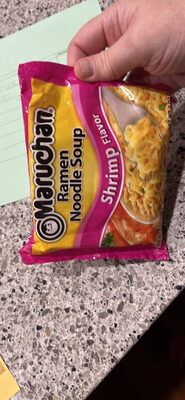
Maruchan Ramen Noodle Soup Shrimp Flavor
Limited data.
Nutrition facts panel is not on file for this product. The verdict reflects ingredient signals (NOVA, additive severity) only — not the full nutritional profile.
How it scored 50 / 100
Nutrition
—
No nutrition facts on file
Additives
0 / 30
Severity-weighted
Processing
0 / 10
NOVA group 4
Nutrition snapshot
Nutri-Score
—
Not on file
NOVA group
4
Ultra-processed
Saturated fat
—
No nutriment data
Serving
86 g
1 noodle block with (86 g)
Ingredients 26 listed
- 1 Salt Sodium chloride (NaCl), a crystalline mineral compound composed of roughly 40% sodium and 60% chloride by mass.Low
- 2 Maltodextrin A short-chain glucose polymer (3–20 glucose units, DE 3–20) produced by partial enzymatic or acid hydrolysis of corn, potato, rice, or wheat…Moderate
- 3 Hydrolysed Corn Protein Corn protein broken down into smaller peptides and amino acids by acid or enzymatic hydrolysis.Low
- 4 Wheat Wheat is a cereal grain (genus Triticum).Low
- 5 Soy Protein Protein extracted from soybeans, sold as concentrate, isolate, or textured protein.Low
- 6 Sugar Sucrose, a disaccharide of glucose and fructose, refined from sugarcane or sugar beets.Moderate
- 7 Soy Sauce Fermented condiment made from soybeans, wheat, salt, and koji culture (Aspergillus).Low
- 8 Vegetable Generic, unspecified umbrella term referring to any of multiple edible plant species used as vegetables.Safe
- 9 Spice A regulatory category (21 CFR 101.22) for aromatic vegetable substances used primarily for seasoning. Excludes onion, garlic, and celery, wh…Moderate
- 10 Caramel Caramel: a dark colorant made by controlled heat treatment of food-grade carbohydrates; four classes (E150a-d) differ by manufacturing react…Moderate
- 11 Lactose Disaccharide sugar (glucose + galactose) naturally present in milk; commercially produced from wheyLow
- 12 Vegetable Oil Generic term covering edible oils extracted from plant sources (soybean, canola, corn, sunflower, palm, etc.).Low
- 13 Citric Acid Citric acid (E330), a weak organic acid naturally present in citrus fruit and produced commercially via Aspergillus niger fermentation.Low
- 14 Silicon Dioxide Silicon dioxide (silica, E551) is a synthetic amorphous silica.Low
- 15 Disodium Inosinate Disodium inosinate (IMP), a flavor-enhancing nucleotide derived from meat, fish, or fermentation. Used synergistically with MSG.Low
- 16 Disodium Guanylate Disodium guanylate (GMP), a flavor-enhancing nucleotide derived from yeast or fish, used synergistically with MSG.Low
- 17 Natural And Artificial Flavouring A blanket label for proprietary flavor mixtures combining naturally derived flavor constituents (essential oils, extracts, distillates) with…Low
- 18 Yeast Extract Concentrate of soluble compounds from autolyzed Saccharomyces yeast cells; contains naturally occurring glutamates and nucleotides.Low
- 19 Monosodium Glutamate Monosodium glutamate (MSG, E621) is the sodium salt of glutamic acid, a non-essential amino acid.Low
- 20 Soya Bean Seed of Glycine max; legume rich in protein and oil.Low
- 21 Onion The edible bulb of Allium cepa L., a widely cultivated vegetable in the Allium family that also includes garlic, shallots, and leeks.Safe
- 22 Garlic Allium sativum, a bulbous plant whose cloves are rich in organosulfur compounds — most notably allicin (formed when garlic is crushed) — plu…Safe
- 23 Chives Hollow green leaves of Allium schoenoprasum, used as a culinary herb.Safe
- 24 Celery Seed Dried seeds of celery (Apium graveolens) used as a spice.Low
- 25 Palm Oil Edible oil extracted from the mesocarp of the fruit of Elaeis guineensis (oil palm). Semi-solid at room temperature; ~50% saturated fat (mos…Moderate
- 26 Anti-Caking Agent Generic class label for substances added to powdered or granular foods to prevent clumping.Low
Scan it before you buy it
Get Ube for iOS and Android — point at any barcode, see what's actually in there.
Get the app