Home
›
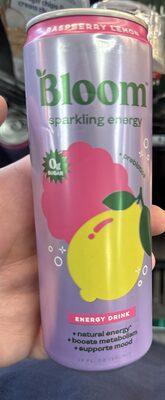
Bloom Raspberry Lemon sparkling energy
Limited data.
Nutrition facts panel is not on file for this product. The verdict reflects ingredient signals (NOVA, additive severity) only — not the full nutritional profile.
How it scored 50 / 100
Nutrition
—
No nutrition facts on file
Additives
0 / 30
Severity-weighted
Processing
0 / 10
NOVA group 4
Nutrition snapshot
Nutri-Score
ABCDE
EU 5-tier scale (okay)
NOVA group
4
Ultra-processed
Saturated fat
—
No nutriment data
Serving
355 g
12 fl oz
Ingredients 23 listed
- 1 Carbonated Water Water infused with carbon dioxide gas under pressure.Safe
- 2 Citric Acid Citric acid (E330), a weak organic acid naturally present in citrus fruit and produced commercially via Aspergillus niger fermentation.Low
- 3 Galactomannan Prebiotic Fiber —
- 4 Taurine A sulfur-containing amino-sulfonic acid naturally found in animal tissues; commercially synthesized for use in supplements and energy drinks…Low
- 5 Natural Flavouring A regulatory umbrella term (21 CFR 101.22) for flavor extracts derived from spices, fruit, vegetable, herb, bark, root, leaf, meat, seafood,…Low
- 6 Theanine L-theanine — a non-protein amino acid (γ-glutamylethylamide) naturally found in tea (Camellia sinensis).Low
- 7 Natural Caffeine Caffeine extracted from natural sources such as coffee beans, tea leaves, or guarana.Moderate
- 8 Potassium Benzoate Potassium benzoate, the potassium salt of benzoic acid; a chemical preservative.Moderate
- 9 Sucralose Sucralose (E955) is a chlorinated derivative of sucrose used as a high-intensity, non-caloric sweetener.Moderate
- 10 Tripotassium Citrate Tripotassium citrate — potassium salt of citric acid.Low
- 11 Ginseng Root of Panax ginseng or Panax quinquefolius, used as botanical and dietary supplement.Low
- 12 Root Extracts Generic umbrella term for extracts derived from various plant roots (e.g., licorice, ginger, beet, chicory); composition varies widely.Safe
- 13 Litchi Chinensis Fruit Extract Extract from the fruit of Litchi chinensis (lychee), a tropical fruit native to Southeast Asia.Low
- 14 Green Tea Leaf Dried leaves of Camellia sinensis used for tea.Low
- 15 Apple Cider Vinegar Vinegar produced by fermenting apple juice; principal acid is acetic acid.Safe
- 16 Nicotinic Acid Nicotinic acid (niacin or vitamin B3, pyridine-3-carboxylic acid). E375 is the EU additive code for its use as a vitamin/nutrient added to f…Low
- 17 Pyridoxine Hydrochloride Pyridoxine hydrochloride is a synthetic form of vitamin B6 used for nutrient fortification.Low
- 18 Riboflavin Riboflavin (vitamin B2), a water-soluble B vitamin. Used as a yellow-orange food color (E101) and as a vitamin fortificant.Low
- 19 Cyanocobalamin Synthetic form of vitamin B12 (cobalamin); essential micronutrient containing cobalt.Low
- 20 from Green Coffee Bean Extract —
- 21 Preservative Generic umbrella term for unspecified preservative additive(s).Low
- 22 Panax Ginseng Root of Panax ginseng (Asian/Korean ginseng), containing ginsenosides, used in supplements and functional foodsModerate
- 23 Vitamin B6 Pyridoxine (and related forms pyridoxal, pyridoxamine), a water-soluble B-vitamin essential for protein metabolism.Low
Scan it before you buy it
Get Ube for iOS and Android — point at any barcode, see what's actually in there.
Get the app