Home
›
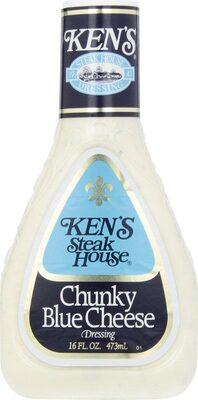
Ken's Steak House Chunky Blue Cheese Dressing
Why this verdict: 1 banned ingredient(s) present.
Limited data.
Nutrition facts panel is not on file for this product. The verdict reflects ingredient signals (NOVA, additive severity) only — not the full nutritional profile.
How it scored 0 / 100
Nutrition
—
No nutrition facts on file
Additives
0 / 30
Severity-weighted
Processing
0 / 10
NOVA group 4
Nutrition snapshot
Nutri-Score
ABCDE
EU 5-tier scale (poor)
NOVA group
4
Ultra-processed
Saturated fat
—
No nutriment data
Serving
30 g
2 tbsp (30 g)
Ingredients 26 listed
- 1 Soya Oil Vegetable oil extracted from soybeans (Glycine max), typically refined, bleached, and deodorized. High in polyunsaturated fats, particularly…Low
- 2 Water Water intended for human consumption; the most common ingredient in processed foods and beverages. Bottled water is regulated as a food unde…Safe
- 3 Distilled Vinegar Dilute (~5%) acetic acid solution produced by fermentation and distillation.Safe
- 4 Blue Cheese Cheese ripened with cultures of Penicillium roqueforti or P. glaucum that produce blue/green veins and characteristic pungent flavor.Low
- 5 Salt Sodium chloride (NaCl), a crystalline mineral compound composed of roughly 40% sodium and 60% chloride by mass.Low
- 6 Sugar Sucrose, a disaccharide of glucose and fructose, refined from sugarcane or sugar beets.Moderate
- 7 Partially Hydrogenated Soybean Oil Soybean oil that has been partially hydrogenated, creating industrial trans fatty acids (IP-TFA).Banned
- 8 Natural Flavouring A regulatory umbrella term (21 CFR 101.22) for flavor extracts derived from spices, fruit, vegetable, herb, bark, root, leaf, meat, seafood,…Low
- 9 Calcium Caseinate A milk-derived protein produced by neutralizing acid casein with calcium hydroxide; supplies casein protein with calcium.Low
- 10 Lactic Acid Organic acid (E270) naturally produced by lactic acid bacteria during fermentation; also produced industrially.Low
- 11 Xanthan Gum Xanthan gum is a high-molecular-weight polysaccharide produced by aerobic fermentation of glucose or sucrose by the bacterium Xanthomonas ca…Low
- 12 Potassium Sorbate Potassium salt of sorbic acid, a short-chain unsaturated fatty acid.Low
- 13 Disodium Edta Disodium ethylenediaminetetraacetate, a synthetic chelating (sequestering) agent that binds metal ions.Moderate
- 14 Garlic Allium sativum, a bulbous plant whose cloves are rich in organosulfur compounds — most notably allicin (formed when garlic is crushed) — plu…Safe
- 15 Polyoxyethylene Sorbitan Monostearate Polyoxyethylene sorbitan monostearate (Polysorbate 60), a non-ionic synthetic emulsifier.Moderate
- 16 Onion The edible bulb of Allium cepa L., a widely cultivated vegetable in the Allium family that also includes garlic, shallots, and leeks.Safe
- 17 Propane-1‚2-Diol Alginate Propane-1,2-diol alginate (propylene glycol alginate, PGA), a chemically modified alginate ester used as a stabilizer/emulsifier.Low
- 18 Yeast Extract Concentrate of soluble compounds from autolyzed Saccharomyces yeast cells; contains naturally occurring glutamates and nucleotides.Low
- 19 Spice A regulatory category (21 CFR 101.22) for aromatic vegetable substances used primarily for seasoning. Excludes onion, garlic, and celery, wh…Moderate
- 20 Beta-Carotene Beta-carotene, an orange-yellow carotenoid pigment that is a vitamin A precursor, sourced from plants (carrots, palm fruit, algae) or made s…Low
- 21 Sunflower Oil Edible vegetable oil pressed from the seeds of Helianthus annuus, typically high in linoleic acid (omega-6) or, in high-oleic varieties, ole…Low
- 22 Milk Lacteal secretion from cows or other domesticated ruminants (goats, sheep). Contains water, lactose, milk fat, casein and whey proteins, vit…Low
- 23 Lactic Ferments Live lactic-acid-producing bacterial cultures (typically Lactobacillus, Lactococcus, Streptococcus thermophilus, Leuconostoc) added to milk …Low
- 24 Enzyme Industrial food enzyme — protein catalysts derived from plants, animals, or microorganisms (often via fermentation), added to food to perfor…Low
- 25 CELLULOSE GEL —
- 26 Sodium Carboxy Methyl Cellulose Sodium carboxymethyl cellulose (cellulose gum, E466) is a chemically modified cellulose derivative.Moderate
Scan it before you buy it
Get Ube for iOS and Android — point at any barcode, see what's actually in there.
Get the app