Home
›
Olipop Ginger Lemon
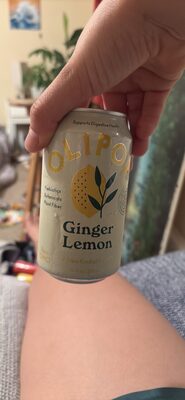
Limited data.
Nutrition facts panel is not on file for this product. The verdict reflects ingredient signals (NOVA, additive severity) only — not the full nutritional profile.
How it scored 80 / 100
Nutrition
—
No nutrition facts on file
Additives
0 / 30
Severity-weighted
Processing
0 / 10
NOVA unknown
Nutrition snapshot
Nutri-Score
ABCDE
EU 5-tier scale (okay)
NOVA group
—
Not classified
Saturated fat
—
No nutriment data
Serving
355 g
1 can (355 g)
Ingredients 18 listed
- 1 Filtered Water Water that has passed through a filtration process to remove impurities.Safe
- 2 Ginger The rhizome of Zingiber officinale, used fresh, dried, or powdered as a spice and traditional medicine.Safe
- 3 Apple Juice Liquid extracted from apples (Malus domestica), filtered or with pulp, sometimes pasteurized and concentrated.Safe
- 4 Lemon Juice Liquid pressed from the fruit Citrus limon.Safe
- 5 Cassia Bark of Cinnamomum cassia (Chinese cinnamon) – the most common 'cinnamon' sold in the U.S.; high in coumarin.Moderate
- 6 Stevia Rebaudiana Leaf/Stem Powder Powder made from whole or partially refined stevia plant leaves and stems.Moderate
- 7 Himalayan Pink Salt Rock salt mined from the Khewra Salt Mine in Pakistan, colored pink by trace iron oxide.Low
- 8 ginger essence —
- 9 mulled spice flavor —
- 10 Chicory Root Root of Cichorium intybus, used as a coffee substitute and as a source of inulin (a soluble fiber).Low
- 11 Jerusalem Artichoke Helianthus tuberosus — edible tuber high in inulin (a fructan dietary fiber).Low
- 12 Kudzu Root Root of the kudzu vine (Pueraria lobata/montana), used as a starch source and traditional Asian medicine.Low
- 13 cassava fiber —
- 14 Cassava The starchy root of Manihot esculenta, a staple food in tropical regions.Low
- 15 Marshmallow A soft confection traditionally made from sugar, corn syrup, water, gelatin (or egg whites/agar), and flavoring.Low
- 16 Slippery Elm Bark Inner bark of Ulmus rubra tree, traditionally used as demulcent herbal supplement.Low
- 17 Nopal Cactus Edible pads (cladodes) of the prickly pear cactus (Opuntia ficus-indica), commonly used in Mexican cuisine.Safe
- 18 Marigold Tagetes erecta (Aztec marigold) flowers, source of lutein and xanthophyll pigments used as food coloring.Low
Scan it before you buy it
Get Ube for iOS and Android — point at any barcode, see what's actually in there.
Get the app